
The United States on Thursday stepped up its campaign targeting Al Qaeda and Taliban militants in Pakistan's restive northwestern tribal region as missiles from CIA-operated drones killed eights suspected insurgents.

The death toll from the shooting targeting the Jewish community celebrating the first day of Hanukkah at Australia's Bondi Beach has risen to 16, while at least 40 people remain hospitalised, New South Wales (NSW) Police confirmed on Monday.

Since May 10, when Trump announced on social media that India and Pakistan had agreed to a "full and immediate" ceasefire after a "long night" of talks mediated by Washington, he has repeated his claim over 70 times that he ended the conflict between India and Pakistan.

Poonch district alone accounted for 13 civilian deaths among 28 fatalities in the Pakistani shelling and drone attacks in Jammu and Kashmir after the Indian armed forces carried out missile strikes on terror infrastructure across the border under Operation Sindoor in May in retaliation to the April 22 Pahalgam terror attack that left 26 persons, mostly tourists, dead.

The first flight carrying 110 Indian students, who were evacuated to Armenia from war-torn Iran, landed in Delhi in the early hours on Thursday.

While many areas compete for resources, defence, education, and adaptation deserve focus for maximum impact, suggests Laveesh Bhandari.
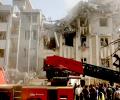
Israeli strikes at multiple targets in Iran; Tehran strikes back at Tel Aviv.

India on Thursday night swiftly foiled Pakistan's attempts to hit various key Indian installations including military stations at Jammu, Pathankot and Udhampur with drones and missiles, the defence ministry said.

American drones carried out one of their deadliest strikes in Pakistan's troubled northwest firing 18 missiles to hit multiple Taliban targets, including terrorist training camps, hideouts and vehicles killing 15 militants.

'We should learn from the wild world on how they live harmoniously.'

Iran has fired 280 ballistic missiles at Israel since early Friday in retaliation to Israeli strikes on its nuclear programme, its military and political officials, and nuclear scientists.
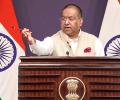
India expects Turkiye to strongly urge Pakistan to end its support to cross-border terrorism, said ministry of external affairs spokesperson, Randhir Jaiswal during the weekly briefing on Thursday.

This is the first known instance of drones being used to drop bombs on civilians by insurgents in India.
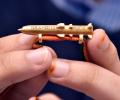
Glimpses from around India that will make you smile and cry.

Claiming yet again that he solved the conflict between India and Pakistan, United States President Donald Trump has said that 'no one in history is more deserving than him' of the Nobel Peace Prize, as he criticised former President Barack Obama for getting the honour even though he 'didn't do anything'.

Bangladesh is set to hold the funeral of youth leader Sharif Osman Hadi amid tight security following unrest triggered by his death. The funeral prayer will be held at the National Parliament Building. The country is also observing a day of state mourning.
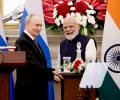
India and Russia have called for an uncompromising global fight against terrorism without hidden agendas and double standards. Prime Minister Narendra Modi asserted that the menace is a direct attack on the values of humanity.
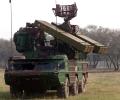
The Indian Army is conducting field trials of several cutting-edge defence systems under 'near-combat conditions', integrating electronic warfare simulations, to assess their performance rigorously, officials said on Saturday.

Maharashtra Chief Minister Devendra Fadnavis has directed officials to declare leopard attacks on humans as a "state disaster" and proposed reclassification of leopards under the Wild Life (Protection) Act to better manage man-eating animals. The decision follows a rise in leopard attacks in the state, particularly in the Pune district.

The Indian Navy on Saturday said its guided missile destroyer INS Visakhapatnam has deployed a team to help fire-fighting efforts on board British oil tanker MV Marlin Luanda which has got 22 Indian and one Bangladeshi crew members.

Saturday's drone attack on MV Chem Pluto came amid increasing concerns over various commercial vessels being targeted reportedly by Iran-backed Houthi militants in the Red Sea and Gulf of Aden amid the Israel-Hamas conflict.

'Should China's interest in the Teesta River projects be approved, it would likely result in heightened Chinese presence near the Siliguri corridor.'
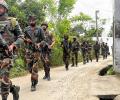
Security forces in the Jammu region are maintaining a strong vigil and conducting operations to track down 40 to 50 terrorists active in the area. Multi-tier security measures, including anti-drone strategies and intensified night operations, are in place.

Blackout was imposed in Jaisalmer, Barmer and other border areas in Rajasthan on Sunday night as a precautionary measure in the wake of Saturday's violation by Pakistan of an understanding reached with India following four days of military confrontation.

BCCI secretary Devajit Saikia said that an invitation has been extended to chiefs of all three Armed forces, top-ranked officers and soldiers for the IPL 2025 final on June 3.
The drones struck before dawn, firing four missiles at the compound and a vehicle in Mir Ali, 25 km from Miranshah, the main town of North Waziristan Agency. US and Afghan officials have described the area as a hub for Al Qaeda and Taliban elements
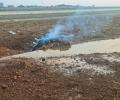
Dar's statement, echoed by another federal minister, came as the Indian and Pakistani militaries targeted each other's installations using missiles in the last more than 12 hours, further escalating the already tense conflict situation.

The IPL match between Punjab and Delhi was called off mid-way on Thursday after Pakistan attempted to invade the airspace near Chandigarh with a drone attack, mandating an Indian retaliation.
A United States drone targetted a house in Pakistan's restive North Waziristan tribal region, killing at least four terrorists and injuring two others.
A United States drone targeted a house in Pakistan's restive North Waziristan tribal region, killing at least four militants and injuring two others.
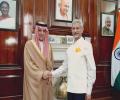
The Saudi statement came as tensions soared significantly, with Pakistan claiming that its three airbases were targeted by Indian missiles and drones early Saturday.
A United States drone targeted a compound in the restive North Waziristan tribal region of Pakistan today, killing 10 suspected militants, officials said.
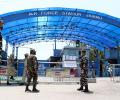
'The fact that this happened and the fact that we were not able to bring it down, we were not even able to trace from where it came from and where it went, certainly raises questions on our level of preparedness.'
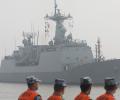
The Chinese navy has launched an amphibious assault ship that will double up as a drone carrier, integrating the battleship with unmanned aerial vehicles (UAVs). The Type 076 amphibious assault ship will play a key role in boosting uncrewed combat capabilities, a navy commander has said. This marks the first official acknowledgement of the warship's widely speculated role as a drone carrier.
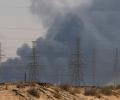
The assault on Saudi Aramco's processing plant in Abqaiq and at the Khurais oil field caused huge fire but no casualty was reported, Gulf News reported.

Amid Indian strikes, PCB in huddle to decide whether PSL should continue

Meanwhile, Trump said Cambodia and Thailand have started fighting again and "tomorrow", he will make a phone call to those countries.

Pakistan Prime Minister Shehbaz Sharif has once again thanked former US President Donald Trump for resolving the India-Pakistan conflict in May, despite India's consistent denial of third-party intervention.

Drones are a new technology added recently to the weapons used in the violence between the two large ethnic groups -- Meitei and Kuki -- in the northeastern state, which left over 200 people dead since May last year.

Several top Indian athletes and former cricketers have rallied behind the Indian Armed Forces, expressing solidarity, pride, and gratitude for their bravery during Operation Sindoor.
